
🃏 How trading card games have changed over the years
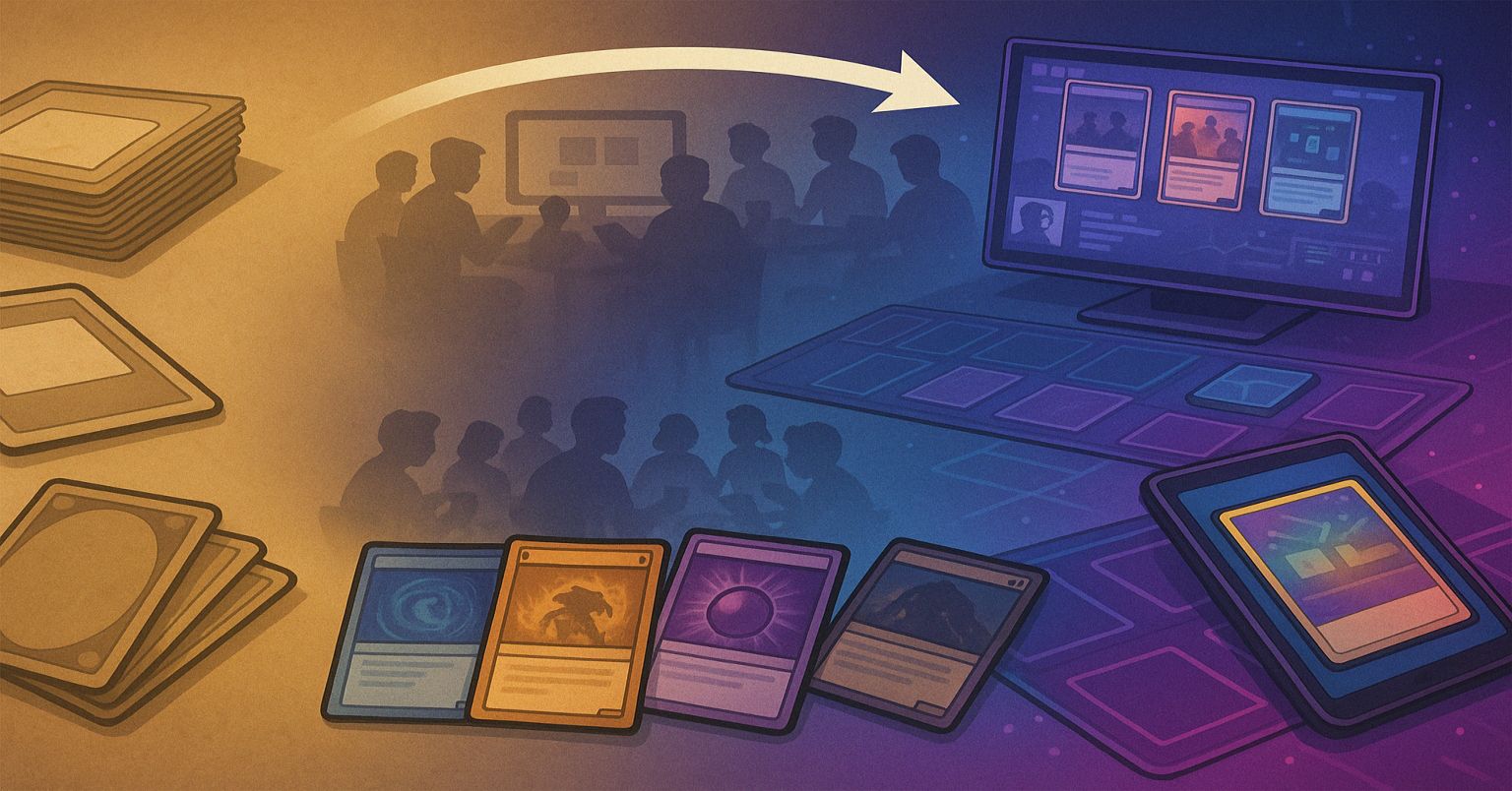
Trading card games (TCGs) have undergone an impressive evolution since their inception. What once began with simple paper cards is now a multimedia phenomenon with digital offshoots, professional tournaments and huge fan communities. But how exactly have trading card games changed? Let's take a look at the journey from simple card swapping in the schoolyard to eSport-worthy competitions.
📅 Date: 16.04.2025
🕑 Reading time: 4 min.
1. The beginnings – Magic, Pokémon & Co.
The origins of modern TCGs date back to the early 1990s. With “Magic: The Gathering” (1993), Wizards of the Coast set a milestone. The game brought the concept of a collectible, strategically deep card game to the market for the first time. Just a few years later, it was followed by the global hit “Pokémon TCG”, which quickly spread to schoolyards around the world.
Back then, collecting was almost as important as playing itself. Glitter cards, first editions, and limited editions determined the value—often more emotionally than financially.
2. The 2000s – Complexity & Community Grow
With the success of Magic and Pokémon, new games such as Yu-Gi-Oh!, Duel Masters, World of Warcraft TCG, and many more. This era was characterized by increasing rule complexity, tournament scenes, and official rankings.
The community played an increasingly important role: forums, fan websites, and local leagues emerged where deck lists were shared and strategies discussed. The meta-game (the most effective cards and tactics in a given playing period) also became increasingly important.
3. Digital revolution – online TCGs and apps
Around 2010, a significant change began: trading card games increasingly shifted to digital. Games such as Hearthstone, MTG Arena, and Pokémon TCG Online made it possible to compete against other players online worldwide.
The advantages were clear: no physical cards needed, instant matches, all from the comfort of your own home. At the same time, the gameplay changed – the tactile experience of trading cards or building decks at the kitchen table gave way to the quick swipe logic of apps.
4. Collecting boom & increase in value
Parallel to digitalisation, the collecting scene experienced a hype, especially during the pandemic. Old cards from the 1990s were suddenly trading for thousands of pounds, partly fuelled by YouTubers and influencers such as Logan Paul. The game briefly took a back seat as the financial value of the cards took centre stage. The market exploded – but so did criticism of speculators and artificial scarcity.
5. Modern trends – hybrid concepts & AI
Today, we are seeing an interesting mix: physical and digital cards often exist in parallel. New projects such as Flesh and Blood or One Piece TCG rely on classic game concepts, while others experiment with augmented reality or blockchain technology .
AI is also making its mark: some platforms analyze moves, help with deck building, or simulate matches. The boundaries between traditional card games, video games, and investment products are becoming increasingly blurred.

Conclusion: Nostalgia meets innovation
Trading card games have changed radically – yet remain true to their core: the joy of playing, collecting, and being part of the community. Whether analog or digital, casual or competitive – the fascination lives on.
And who knows? Maybe in ten years, your avatar will be playing in a virtual TCG tournament against an AI opponent, while you hold a real card from the 90s in your hand – as a reminder of how it all began.